
Drawn for polling-station duty in Spain: what to do, the pay and how to be excused
How mesa members are drawn, the deadlines for the 29 November election, accepted excuses, the allowance, time off work and what happens on the day, from Spanish electoral law.
On this page (9)
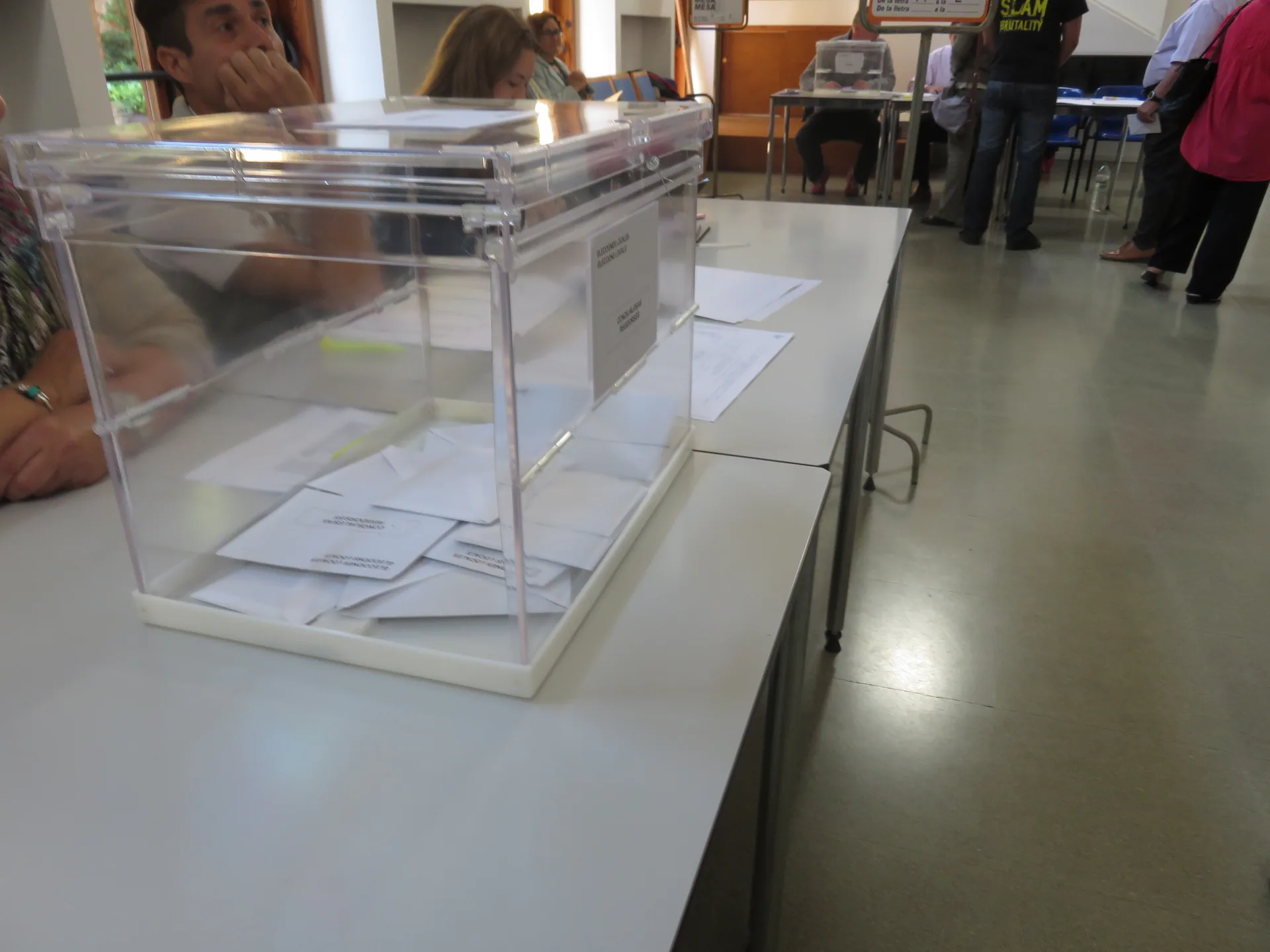
Every Spanish polling station has a mesa electoral: a chair and two members, drawn by lot from the voters registered at that station. If you are drawn, it is compulsory, but you have seven days to submit a documented excuse, you are paid a €75 allowance and you get time off work. Here are the deadlines for the general election of 29 November 2026 and everything the law says.
Data on this page last verified: 17 October 2026.
Each person's deadlines run from the day they are notified. The dates on this page are the latest possible ones in the official calendar.
Who can be drawn
The town hall holds a public draw among everyone on that station's electoral roll who is under 70 and can read and write. The chair must hold the Bachillerato or an upper vocational qualification, or failing that the Graduado Escolar or equivalent. Two substitutes are drawn for each post, so nine people are drawn per station.
The results of the draw are not published: only the people chosen are notified, together with an instruction manual.
Deadlines for 29 November
| Step | Legal deadline | Latest date |
|---|---|---|
| Draw at the town hall | Days 25 to 29 after the election is called | 31 October to 4 November |
| Notification | 3 days after the draw | 7 November |
| Submit an excuse to the Junta Electoral de Zona | 7 days from your notification | 14 November |
| Junta's decision | 5 days | 19 November |
| Report a later impediment | 72 hours before 08:00 on polling day | Thursday 26 November, 08:00 |
Spanish Interior Ministry calendar (election called on 6 October 2026). Each town hall holds its draw on one day within the window.
How to be excused
You have 7 days from notification to give the Junta Electoral de Zona (the local electoral board) a "justified and documented" reason. The board decides within 5 days and must give reasons for a refusal. There is no electoral appeal, only the administrative courts. The board's contact details are on your notification.
Under the Central Electoral Board's instruction, these reasons are always accepted once documented:
- Being aged 65 to 69.
- Having a recognised disability of any degree, or a permanent absolute incapacity or severe disability pension.
- Being on sick leave.
- Being six or more months pregnant, or on birth or childcare leave.
- Directly and continuously caring for a breastfed baby, children under 12, or disabled people in your legal care.
- Caring for a relative up to the second degree who cannot look after themselves.
- Having served on a mesa at least three times in the last ten years, provided the table can still be filled from that station's voters.
- Being a victim protected by a restraining order against someone who votes at the same polling venue.
Other reasons are judged case by case: an illness that makes the task especially hard, surgery that cannot be postponed, a major family event that day, being a single parent of children under 14, or essential-service work that day (health, fire, civil protection) with a report from your manager. Having to work, or being on holiday, is not an automatic excuse.
If something comes up later
If, after the seven days, something prevents you from going, tell the Junta Electoral de Zona at least 72 hours before 08:00 on polling day, with proof. If it happens even later, tell them immediately, and always before the table is formed.
What happens if you don't turn up
Failing to turn up, leaving without a legitimate reason, or not giving the excuse or notice the law requires is a criminal offence (article 143 of the electoral law): three months to a year in prison, or a fine of six to twenty-four months (a day-fine). It applies to substitutes too.
The pay
Each sitting member is paid an allowance of €75 per polling day, however long it lasts, under Orden INT/650/2026 (it used to be €70). Substitutes are paid only if they end up sitting. The allowance is not taxed.
If you have to take the documents to the court at the end, you can claim the travel costs from the Government Delegation or Sub-delegation.
Time off work
- Mesa members: if polling day is a working day for you, you get the whole day off with pay, and in every case five fewer hours of work the next day. For 29 November, a Sunday, that is Monday 30 November. Substitutes who end up sitting get the same. The electoral board issues the certificate.
- Voters working that day: you are entitled to up to four paid hours to vote, pro rata for part-time work. In Catalonia the Generalitat sets the detail for each election: in 2023 it was two hours if your shift overlapped voting hours by more than two and less than four, and four if it overlapped by four or more, with the employer choosing when. The order for 29 November is published in the DOGC a few days before the vote.
- Social Security: chairs, members and substitutes are covered that day; any injury, including on the way there or back, counts as a work accident.
How the day goes
| Time | What happens |
|---|---|
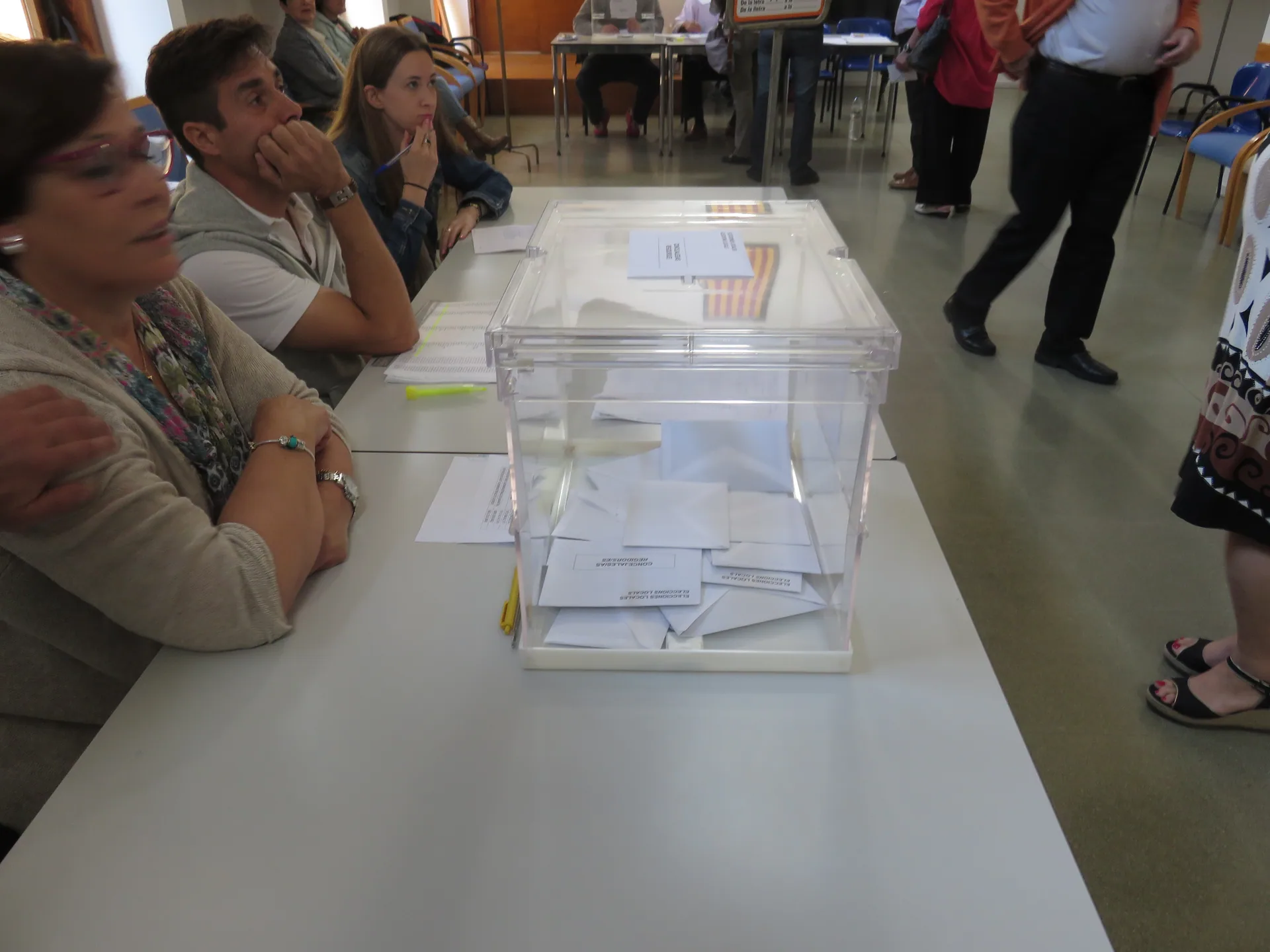
| 08:00 | Chair, members and substitutes meet at the polling station. Anyone missing is replaced by their substitute. |
| 08:00–08:30 | The table is formed and party scrutineers' credentials are received. Substitutes who are not needed can leave. |
| 09:00–20:00 | Voting without a break. If someone steps out, at least two must stay at the table. |
| 20:00 | Voting closes. Those already inside vote, then the postal votes go in, then the table members and scrutineers vote. |
| After | Public count, results posted on the door, and the documents in three envelopes: two to the court, one to the post office. |
The law sets no finishing time: the day ends when the documents have been handed over.
Where to check
- Your polling station and table: on the INE's lookup service, with no login. Polling cards are posted from 2 November.
- Whether you have been drawn: there is no official online lookup. You find out from the notification; if in doubt, ask your town hall or the Junta Electoral de Zona.
- How much are polling-station members paid in Spain?
- €75 per polling day under Orden INT/650/2026. Substitutes are paid only if they sit, and the allowance is not taxed.
- When is the polling-station allowance paid?
- No official rule sets the day or method of payment. Orden INT/650/2026, which sets the €75, only says in its preamble that payments are still mostly made in cash. If you are drawn, ask the Junta Electoral de Zona or your town hall.
- When is the draw for the 29 November election?
- Between 31 October and 4 November 2026. Each town hall picks the day, and you must be notified within three days.
- How long do I have to ask to be excused?
- Seven days from your notification. For 29 November, 14 November at the latest if your draw was on the last day.
- What happens if I don't turn up?
- It is an offence under article 143 of the electoral law: three months to a year in prison, or a day-fine of six to twenty-four months.
Keep reading
Sources
This page cites official and primary sources. If you spot an error, let us know.
- Ley Orgánica 5/1985, del Régimen Electoral General — Boletín Oficial del Estado
- Real Decreto 806/2026, de disolución del Congreso y del Senado y de convocatoria de elecciones — Boletín Oficial del Estado
- Orden INT/650/2026, dieta de los miembros de las mesas electorales — BOE
- Instrucción 6/2011 de la Junta Electoral Central, sobre excusas de miembros de mesa (consolidada) — BOE
- Real Decreto 605/1999, de regulación complementaria de los procesos electorales — BOE
- Calendario electoral, elecciones a Cortes Generales 29-N — Ministerio del Interior
- Preguntas frecuentes: las mesas electorales — Ministerio del Interior
- Consulta de mesas y locales electorales — INE
- Reglamento del IRPF, artículo 9 — BOE
Was this page useful?